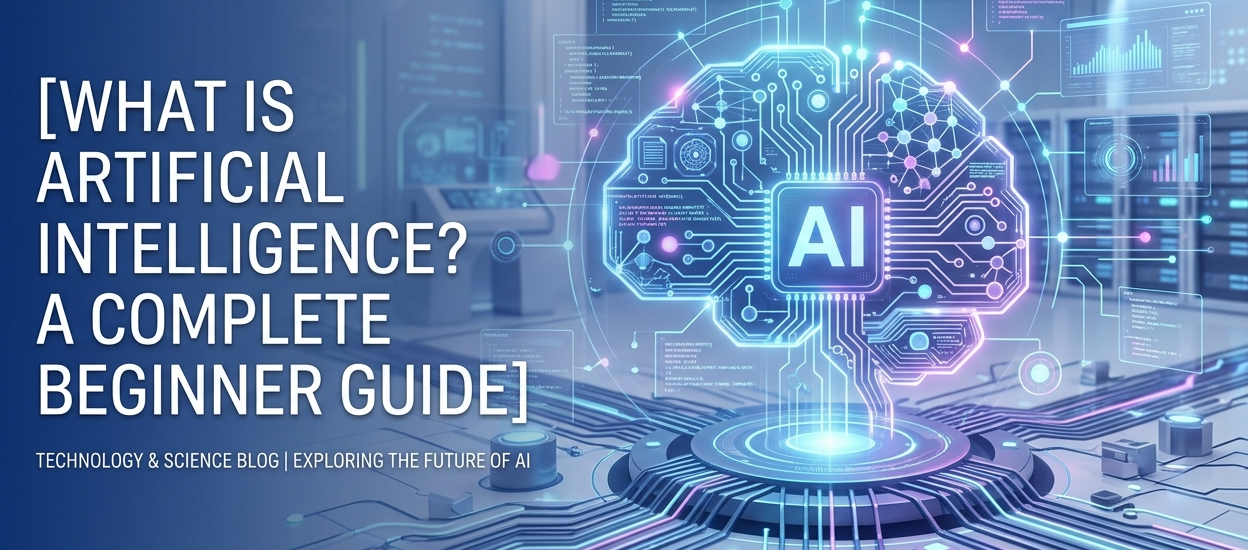
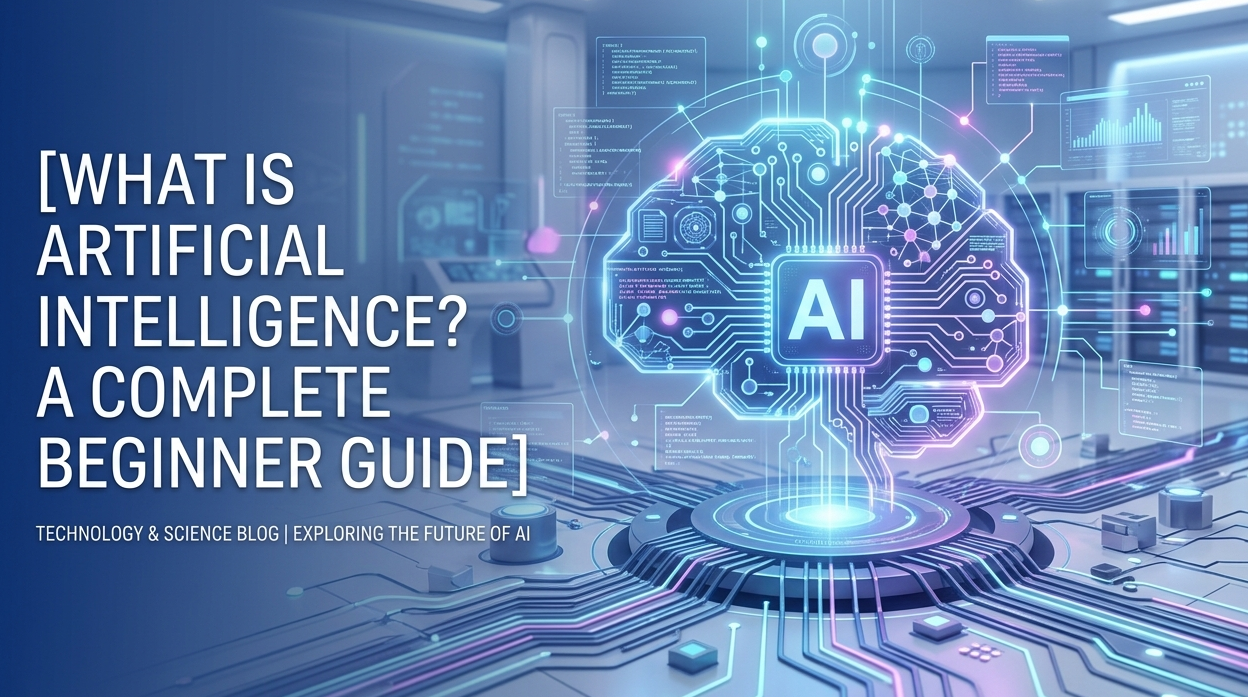
What is Artificial Intelligence? A Complete Beginner Guide
Introduction
What is Artificial Intelligence? A Complete Beginner Guide
Artificial Intelligence (AI) is one of the most exciting and fast-growing technologies in the modern world. From voice assistants on our smartphones to self-driving cars, AI is becoming a part of our everyday lives. Even if you do not realize it, you are probably already using AI in many ways every day.
In simple words, Artificial Intelligence is the ability of machines or computer systems to perform tasks that normally require human intelligence. These tasks include learning, problem-solving, understanding language, recognizing images, and making decisions.
Companies like Google, Microsoft, Amazon, and OpenAI are investing billions of dollars into AI research and development. Because of this rapid progress, AI is transforming industries such as healthcare, education, finance, transportation, and entertainment.
In this beginner-friendly guide, we will explore what Artificial Intelligence is, how it works, where it is used, its benefits and risks, and what the future of AI might look like.
What is Artificial Intelligence?
Artificial Intelligence refers to technology that enables machines to simulate human intelligence. This means computers can perform tasks like learning from data, recognizing patterns, understanding speech, and solving problems.
Instead of following only fixed instructions, AI systems can analyze information, learn from experience, and improve their performance over time.
For example:
- Your phone unlocking with face recognition
- Movie suggestions on streaming platforms
- Smart assistants answering your questions
- Spam filters in email
All these systems use AI to make decisions automatically.
A famous example is ChatGPT created by OpenAI, which can understand questions and generate human-like responses.
How Artificial Intelligence Works
To understand AI better, we need to know how it works behind the scenes. AI systems usually rely on three main components:
1. Data
Data is the most important part of AI. Machines learn from large amounts of data.
For example:
- Images for face recognition
- Voice recordings for speech assistants
- Customer data for recommendation systems
The more quality data an AI system has, the better it can learn.
2. Algorithms
Algorithms are sets of instructions that tell a computer how to analyze data and find patterns.
AI algorithms allow machines to:
- Identify trends
- Make predictions
- Solve problems
3. Machine Learning
Machine Learning is a branch of AI that allows computers to learn automatically from data.
Instead of being programmed for every task, the system improves as it processes more information.
For example:
- Email spam filters learn which emails are spam
- Music apps learn your favorite songs
Types of Artificial Intelligence
AI can be divided into several types based on its capabilities.
1. Narrow AI (Weak AI)
This is the most common type of AI used today. It is designed to perform a specific task.
Examples include:
- Voice assistants
- Recommendation systems
- Image recognition
For instance, Siri by Apple can answer questions but cannot perform tasks outside its programming.
2. General AI (Strong AI)
General AI refers to machines that can think, learn, and perform any intellectual task like humans.
This type of AI does not yet exist but is a goal for many researchers.
3. Super AI
Super AI is a theoretical concept where machines become more intelligent than humans.
It is often discussed in science fiction and advanced research.
Real-Life Examples of Artificial Intelligence
AI is already present in many tools and services that people use daily.
Voice Assistants
Smart assistants like Google Assistant and Amazon Alexa can understand voice commands and perform tasks such as setting alarms, playing music, and answering questions.
Recommendation Systems
Streaming platforms like Netflix and online stores like Amazon use AI to recommend movies, shows, and products based on your interests.
Self-Driving Cars
Companies like Tesla are developing cars that use AI to drive with minimal human input.
These vehicles analyze road conditions, traffic, and obstacles using sensors and cameras.
Healthcare
AI is helping doctors detect diseases earlier and more accurately.
For example, AI systems can analyze medical images to identify conditions such as Cancer faster than traditional methods.
Benefits of Artificial Intelligence
AI provides many advantages for businesses and society.
1. Automation of Tasks
AI can automate repetitive tasks, saving time and reducing human effort.
Examples include:
- Data entry
- Customer service chatbots
- Scheduling systems
2. Improved Decision Making
AI can analyze large datasets quickly and provide insights that help businesses make better decisions.
3. Increased Efficiency
Machines can work 24/7 without breaks, improving productivity in industries like manufacturing and logistics.
4. Better Healthcare
AI helps doctors diagnose diseases, develop new medicines, and provide personalized treatment plans.
5. Enhanced User Experience
AI improves the experience of using apps and websites through personalization.
For example, video suggestions on YouTube are powered by AI algorithms.
Risks and Challenges of Artificial Intelligence
Although AI has many benefits, it also comes with challenges and potential risks.
1. Job Displacement
Automation may replace certain jobs, especially repetitive and manual tasks.
Workers may need to learn new skills to adapt to AI-driven industries.
2. Privacy Concerns
AI systems often rely on large amounts of personal data, raising concerns about privacy and data security.
3. Bias in AI Systems
If AI is trained on biased data, it may produce unfair or inaccurate results.
This is an important issue researchers are working to solve.
4. Dependence on Technology
Over-reliance on AI systems could make society vulnerable if those systems fail or are misused.
The Future of Artificial Intelligence
The future of AI is incredibly promising. Experts believe AI will continue to transform many areas of life.
Some future developments may include:
Smarter Healthcare
AI could help doctors predict diseases before symptoms appear and develop more effective treatments.
Advanced Education
AI-powered learning systems may provide personalized education tailored to each student’s needs.
Smart Cities
Cities could use AI to manage traffic, energy use, and public services more efficiently.
Human-AI Collaboration
Instead of replacing humans, AI will likely work alongside people to improve productivity and creativity.
Companies such as IBM and NVIDIA are already developing advanced AI technologies that could shape the future.
Frequently Asked Questions (FAQs)
1. What is Artificial Intelligence in simple words?
Artificial Intelligence is technology that allows computers and machines to perform tasks that usually require human intelligence, such as learning, understanding language, and making decisions.
2. Is Artificial Intelligence dangerous?
AI itself is not dangerous, but it must be developed and used responsibly to avoid misuse or harmful consequences.
3. Where is AI used today?
AI is used in many areas including smartphones, online shopping, healthcare, banking, social media, and transportation.
4. Can AI replace humans?
AI can automate some jobs, but it is more likely to work together with humans rather than completely replace them.
5. Do you need coding to learn AI?
Basic programming knowledge can help, but many beginner-friendly tools now allow people to explore AI without advanced coding skills.