Quantum Computing: The Era of Superfast Computers
Introduction
Quantum Computing: The Era of Superfast Computers
The world stands on the brink of a computing revolution that will fundamentally transform how we process information and solve complex problems. Quantum computing, leveraging the bizarre principles of quantum mechanics, promises computational power that makes today’s supercomputers look primitive by comparison. This isn’t just about faster computers—it’s about solving problems that are currently impossible, unlocking new scientific discoveries, and reshaping entire industries. Welcome to the era of superfast computers, where the rules of classical physics no longer apply.
Understanding Classical Computing
Before exploring quantum computing, we must understand traditional computers. Every device you use—smartphones, laptops, supercomputers—operates on binary logic using bits. A bit is the fundamental unit of information, existing in one of two states: 0 or 1, on or off. All computing tasks, from simple calculations to artificial intelligence, break down into operations on these binary digits.
Classical computers process bits through transistors acting as switches, performing logical operations at incredible speeds. Over decades, we’ve miniaturized transistors following Moore’s Law, doubling their density approximately every two years. However, we’re approaching physical limits where quantum effects interfere with transistor operation, and certain computational problems remain intractable despite our most powerful machines.
The Quantum Leap: What Makes Quantum Computers Different
Quantum computers operate on fundamentally different principles using quantum bits or qubits. Unlike classical bits locked into either 0 or 1, qubits exploit quantum superposition to exist in both states simultaneously. Imagine a coin spinning in mid-air—neither heads nor tails but somehow both until it lands. This represents a qubit’s superposition state.
Quantum Computing: The Era of Superfast Computers
This property alone revolutionizes computing, but qubits possess another remarkable feature: quantum entanglement. When qubits become entangled, they form correlations where measuring one instantly affects the others, regardless of distance. Einstein called this “spooky action at a distance,” and it enables quantum computers to process information in ways impossible for classical machines.
A classical computer with three bits can represent one of eight values at any moment. Three qubits in superposition represent all eight values simultaneously. This advantage grows exponentially—twenty qubits can represent over a million values at once, while 300 qubits can represent more possibilities than there are atoms in the universe. This exponential scaling creates computational power beyond anything classical computing can achieve.
Quantum Advantage: Beyond Speed
Quantum Computing: The Era of Superfast Computers
Calling quantum computers “superfast” understates their capabilities. For specific problems, quantum computers don’t just accelerate solutions—they transform impossible problems into solvable ones. Tasks requiring classical computers millions of years might take quantum computers mere hours.
This quantum advantage emerges in particular problem domains. Shor’s algorithm enables quantum computers to factor large numbers exponentially faster than classical methods—a capability that threatens current encryption systems protecting global digital infrastructure. What might require a classical supercomputer thousands of years could potentially be accomplished by a sufficiently powerful quantum computer in days or hours.
Grover’s algorithm accelerates database searching, providing quadratic speedups over classical approaches. While not as dramatic as Shor’s exponential speedup, this improvement applies to broad classes of search and optimization problems. Quantum simulation naturally models molecular and chemical systems since quantum computers inherently operate according to quantum mechanical rules, making them ideal for understanding quantum phenomena in chemistry, physics, and materials science.
The advantage isn’t uniform across all problems. Computer scientists classify computational complexity by how solution time grows with problem size. Certain exponentially hard problems for classical computers become polynomially solvable with quantum computing—transforming effectively impossible into practically achievable. This distinction between exponential and polynomial growth is crucial: a polynomial-time algorithm might take seconds or minutes where an exponential algorithm would require millions of years.
Consider optimization problems involving finding the best solution among countless possibilities. Classical computers must essentially check possibilities one by one or use heuristics that find approximate solutions. Quantum computers leverage superposition and entanglement to explore multiple possibilities simultaneously, using quantum interference to amplify correct solutions while canceling incorrect ones. This quantum parallelism isn’t perfect—we can’t simply get answers to all possibilities instantly—but it provides speedups impossible in classical computing.
Machine learning, which involves searching vast parameter spaces to optimize neural network weights, could benefit from quantum optimization algorithms. Training large AI models currently requires weeks on powerful GPU clusters. Quantum acceleration could reduce this to days or hours, enabling more frequent model updates and experimentation with larger, more capable networks.
Building Quantum Computers: Engineering Challenges
Creating qubits presents extraordinary engineering challenges. Several physical systems can serve as qubits, each with unique advantages and difficulties.
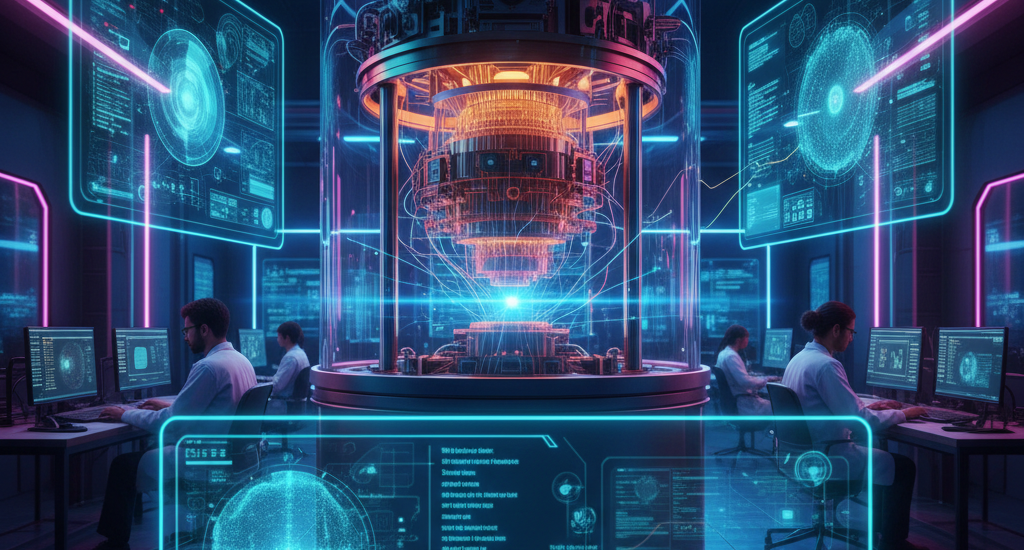
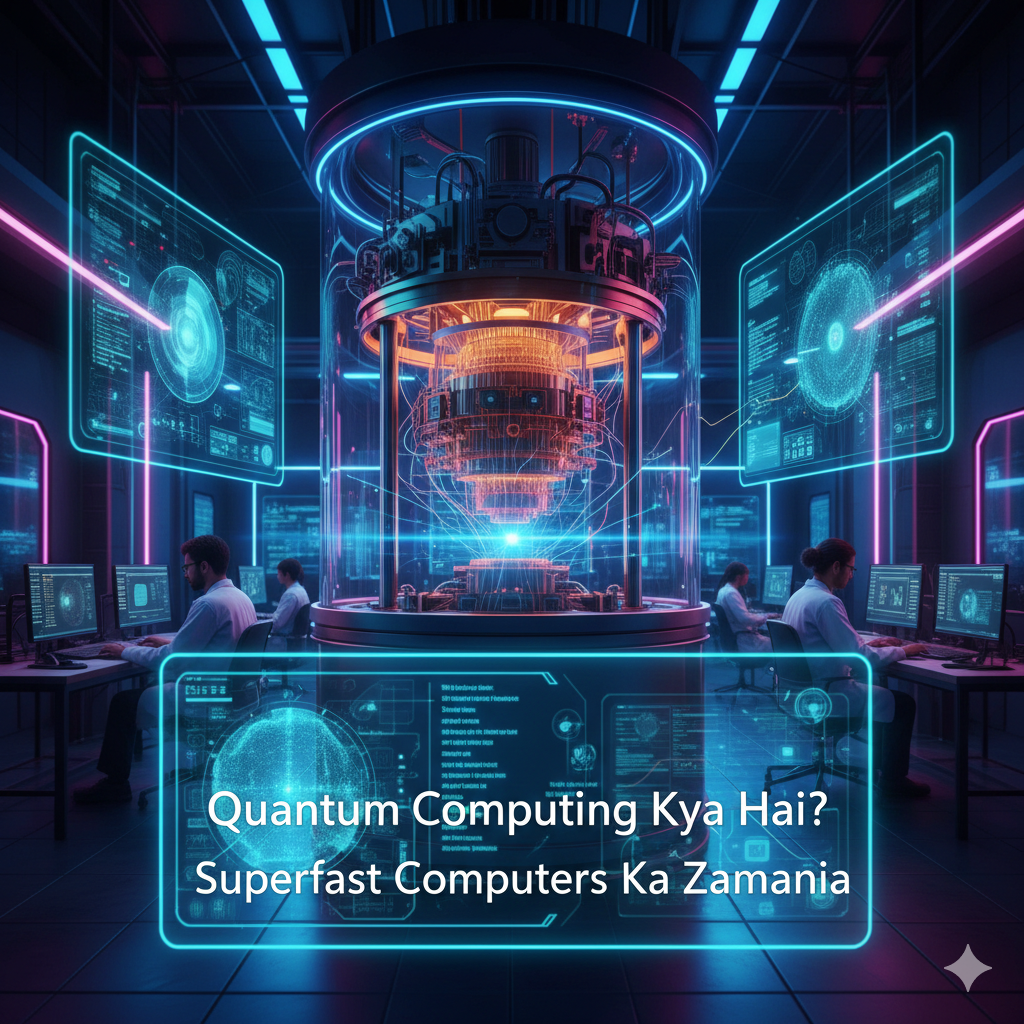
Superconducting circuits, used by Google and IBM, employ tiny loops of superconducting metal cooled to near absolute zero—colder than outer space. At these extreme temperatures, circuits exhibit quantum properties that can be controlled and manipulated with electromagnetic pulses.
Trapped ions utilize individual atoms held by electromagnetic fields as qubits. Laser pulses manipulate these atoms’ quantum states, leveraging their natural quantum properties. Companies like IonQ pursue this approach for its potentially superior qubit quality and connectivity.
Photonic quantum computers use light particles as qubits, potentially operating at room temperature. Topological qubits, being developed by Microsoft, aim to use exotic quantum states theoretically more stable and error-resistant.
Each approach faces challenges regarding coherence time, gate fidelity, qubit connectivity, and scalability. The greatest obstacle is quantum decoherence—qubits’ extreme sensitivity to environmental disturbance.
The Decoherence Problem
Quantum computers’ most significant challenge is maintaining qubit coherence. Qubits are extraordinarily fragile, losing their quantum properties from the slightest disturbance—stray electromagnetic fields, thermal fluctuations, or cosmic rays. This necessitates extreme operating conditions: temperatures near absolute zero, sophisticated electromagnetic shielding, and vibration isolation.
Even with these precautions, qubits maintain quantum states for only microseconds or milliseconds. This fragility requires quantum error correction, encoding single logical qubits across multiple physical qubits and constantly monitoring for errors without destroying quantum states through measurement.
Current quantum computers exist in the Noisy Intermediate-Scale Quantum (NISQ) era, possessing dozens to hundreds of qubits without comprehensive error correction. They demonstrate quantum advantage for specific problems but lack the stability for most practical applications requiring thousands of error-corrected qubits.
Revolutionary Applications
Despite current limitations, quantum computing promises to transform numerous fields. In drug discovery and healthcare, quantum computers can simulate molecular interactions with unprecedented accuracy, potentially accelerating medicine development from decades to years. The COVID-19 pandemic demonstrated the critical need for rapid drug development—quantum computers could dramatically reduce the typical 10-15 year timeline. Understanding protein folding—crucial for treating diseases like Alzheimer’s and Parkinson’s—becomes tractable through quantum simulation. Proteins fold into complex three-dimensional shapes determining their function, and misfolded proteins cause devastating diseases. Quantum computers could simulate the folding process, revealing disease mechanisms and enabling therapeutic design.
Cryptography faces both opportunities and threats. Current encryption protecting everything from online banking to national security relies on factoring difficulty—something quantum computers could break using Shor’s algorithm. This has sparked urgent development of quantum-resistant cryptography. The National Institute of Standards and Technology is standardizing post-quantum cryptographic algorithms to remain secure in the quantum era. Organizations must transition to quantum-safe encryption before large-scale quantum computers emerge.
Simultaneously, quantum key distribution offers theoretically unbreakable encryption based on quantum mechanics, where any interception attempt disturbs the quantum state and alerts users. China has already deployed quantum communication satellites and fiber networks, creating quantum-secure communication channels. This represents a fundamental shift from computational security to physics-based security.
Financial services explore quantum computing for portfolio optimization, risk analysis, and derivative pricing. Monte Carlo simulations crucial to finance could accelerate quadratically, leading to better investment strategies and more accurate risk models. High-frequency trading firms operating on microsecond timescales could gain significant advantages. Fraud detection systems could analyze transaction patterns more effectively, identifying suspicious activity in real-time across millions of transactions.
Artificial intelligence and machine learning could benefit enormously from quantum algorithms that accelerate neural network training and enable new optimization approaches. Quantum neural networks might process information in ways impossible for classical systems, potentially unlocking new forms of artificial intelligence. Pattern recognition, a fundamental AI capability, could improve dramatically with quantum speedups, enhancing everything from medical diagnosis to autonomous vehicle perception.
Climate modeling requires processing vast data and solving complex equations describing atmospheric physics, ocean currents, and countless interacting systems. Current climate models, despite running on supercomputers for weeks, lack resolution and accuracy needed to predict regional climate change impacts with high confidence. Quantum computers could create more accurate climate models, helping humanity better understand and respond to climate change while improving weather prediction for agriculture, disaster preparedness, and renewable energy optimization. Better weather forecasts translate to billions in economic value and saved lives.
Logistics and supply chain optimization involve astronomical solution spaces. Companies like FedEx or UPS managing millions of daily packages could use quantum algorithms to find better routes, saving billions in fuel costs while reducing carbon emissions. Airlines could optimize flight schedules considering weather, fuel prices, crew availability, and maintenance schedules simultaneously. Manufacturing supply chains could optimize inventory levels, production schedules, and distribution networks to minimize costs and maximize efficiency.
Materials science could be transformed by quantum simulation, enabling computational design of new materials—stronger alloys, more efficient solar cells, better batteries, or room-temperature superconductors. Discovery of room-temperature superconductors would revolutionize power transmission, transportation, and countless technologies. Currently, materials scientists work largely through trial and error, synthesizing materials and testing properties. Quantum simulation allows designing materials computationally, dramatically accelerating innovation.
Battery technology crucial for electric vehicles and renewable energy could advance through quantum simulation of electrochemical processes. Understanding exactly how ions move through battery materials and how reactions occur at electrode interfaces could lead to batteries with higher energy density, faster charging, and longer lifespans. This would accelerate the transition from fossil fuels to renewable energy.
Nuclear fusion, the clean energy source powering the sun, requires understanding and controlling plasma physics—quantum systems involving billions of particles. Quantum computers could help optimize fusion reactor designs and control systems, potentially accelerating practical fusion power development. Success would provide virtually unlimited clean energy, solving humanity’s energy challenges.
The Global Quantum Race
Tech giants, startups, and nations compete in quantum computing development. Google achieved “quantum supremacy” in 2019, demonstrating their processor could perform specific calculations faster than classical supercomputers. While debated, this marked an important milestone.
IBM pioneered quantum computing accessibility, offering cloud access through IBM Quantum Experience, allowing worldwide experimentation with quantum algorithms. Microsoft invests in topological qubits, pursuing a potentially more stable approach. Amazon, Intel, Honeywell, Rigetti, and numerous startups pursue different technologies and applications.
China has made quantum computing a national priority, investing billions and achieving significant milestones including powerful quantum computers and quantum communication satellites.
Challenges and Timeline
Significant challenges remain beyond decoherence. Scaling to millions of qubits while maintaining low error rates requires solving immense engineering problems. Specialized operating conditions make quantum computers expensive to build and operate.
Not all problems benefit from quantum computing. Everyday tasks—word processing, web browsing, video streaming—see no quantum advantage. Quantum computers will likely serve as specialized accelerators for specific problem types rather than replacing classical computers.
The quantum computing expertise shortage poses another challenge, requiring deep understanding of quantum mechanics, computer science, and specialized engineering.
Timeline predictions vary widely. Some experts believe practical quantum advantage for commercially valuable applications is 5-10 years away, while others suggest 20-30 years for full potential realization. Progress is accelerating—quantum computers grow larger, more stable, and more accessible through cloud services allowing developers to experiment today.
Preparing for the Quantum Future
Organizations and individuals can prepare now. Technology professionals should learn quantum mechanics basics and quantum algorithms. Programming languages like Qiskit, Cirq, and Q# enable writing quantum programs today.
Organizations should assess which problems might benefit from quantum computing and develop relevant expertise. Staying informed about quantum-resistant cryptography is crucial for long-term data security.
Educational institutions must expand quantum computing programs combining quantum mechanics, computer science, and engineering to train thousands of professionals the industry will require.
Conclusion
Quantum computing represents one of technology’s most exciting frontiers. By harnessing quantum mechanical principles, quantum computers promise to solve previously unreachable problems and dramatically accelerate solutions across medicine, climate science, artificial intelligence, and countless fields.
We’re in this revolution’s early stages, similar to classical computing in the 1950s and 1960s. Today’s quantum computers are research machines requiring specialized expertise with limited practical applications. But just as room-sized computers evolved into ubiquitous devices powering our world, quantum computers will mature and transform technology.
The era of superfast computers isn’t just coming—it’s here in nascent form, growing more powerful yearly. Those who understand and embrace this technology will lead the next innovation wave. The quantum future is being written now, and it promises to be extraordinary.
Quantum Computing: The Era of Superfast Computers
Quantum Computing: The Era of Superfast Computers