
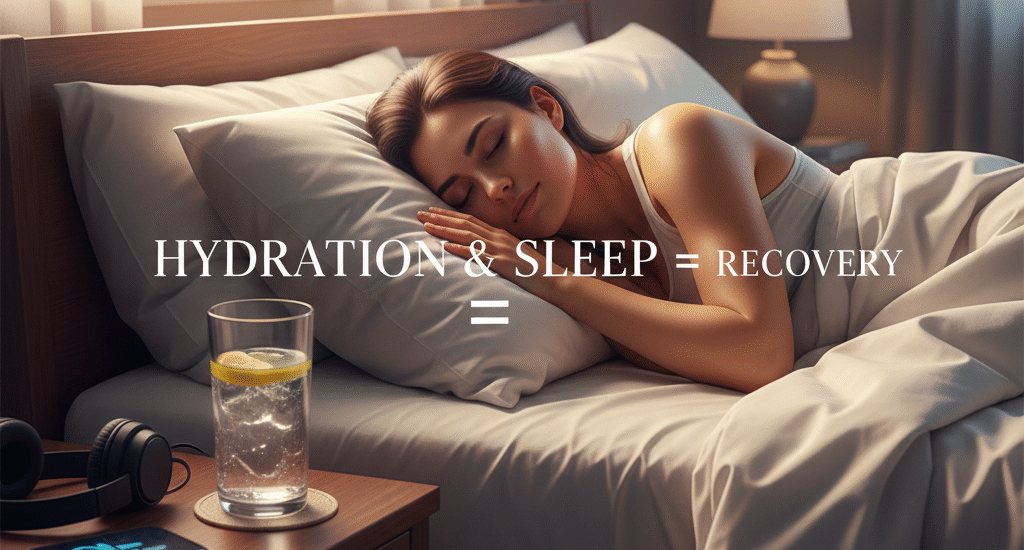
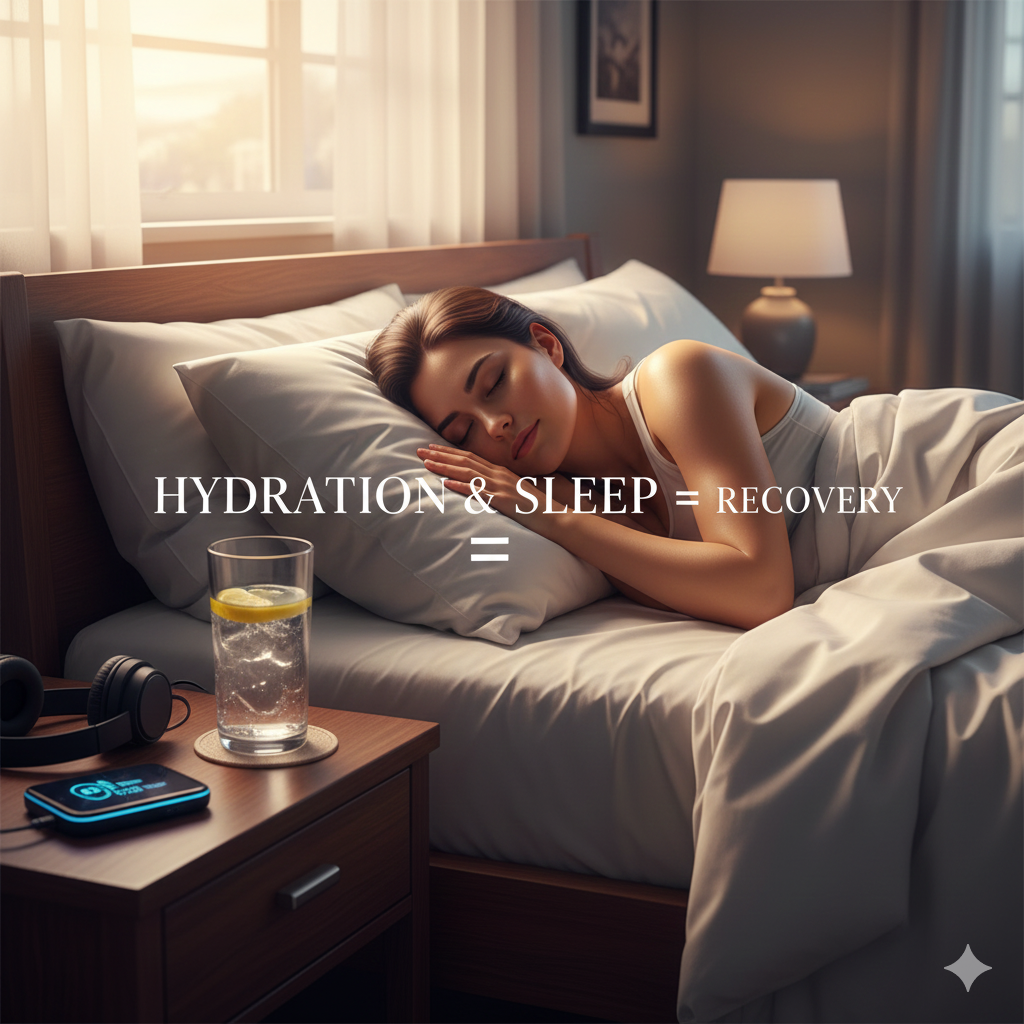
Good skin, better fitness recovery, strong immunity — a large part of all this depends not on fancy creams or exhausting workouts, but on two simple but powerful basics: hydration and sleep. Together, they support your body’s repair, regeneration, and overall well-being.
- Water is essential for nearly all bodily systems: cell function, waste removal, digestion, nutrient transport, temperature regulation. PMC+1
- Sleep gives your body the time and conditions to rebuild, repair tissues, regulate hormones, and refresh both mind and body. Google Translate+2Signature Dermatology+2
Combining both — enough water intake and adequate quality sleep — gives your body the fuel and the rest it needs to recover, rebuild, and maintain health.
✅ Why Hydration Matters for Recovery & Skin
• Water supports skin hydration & elasticity
Adequate water intake helps both superficial and deeper skin layers stay hydrated. A controlled study showed that when people increased daily water consumption, their skin’s moisture content (surface + deeper layers) improved significantly — which helps skin look healthier, more supple, and better “bounce back” when pressed. PMC+1
When skin is well-hydrated:
- It stays more elastic and less prone to dryness, flakiness or tightness. Continental Hospitals+1
- Proper hydration helps maintain the skin barrier, which protects against environmental stress, pollution, irritants. Continental Hospitals+1
- Improved hydration can support even skin tone, prevent dullness, and help skin appear more “glowy” and healthy. Novus Health+1
• Water aids overall bodily recovery & function
Because water helps regulate temperature, supports circulation, digestion, metabolic processes and nutrient transport — it’s vital for recovery after workouts, daily wear-and-tear, stress, and external exposure (pollution, sun, etc.). PMC+1
When you’re dehydrated: you can get fatigue, poor performance, weakened recovery — skin can suffer too (dryness, barrier disruption, sensitivity). WebMD+1
💤 Why Sleep Is Crucial for Recovery & Skin Health
• Body & skin repair during sleep
Sleep is when your body does a lot of repair: tissues regenerate, cells renew, hormones regulate. Google Translate+1
For your skin specifically, good sleep:
- Helps maintain hydration and moisture balance. Lack of sleep disrupts normal moisture retention — leading to dryness and dullness. Innovative Dermatology+1
- Supports collagen production and skin elasticity. Collagen helps skin stay firm, smooth and youthful, preventing premature aging. Signature Dermatology+1
- Reduces inflammation and stress on the skin — better sleep helps keep inflammation in check, which helps with skin issues (like acne, sensitivity, redness). Signature Dermatology+1
- Minimizes under-eye circles, puffiness, and uneven tone or dullness often caused by poor sleep. Signature Dermatology+1
• Sleep supports overall health & recovery
Beyond skin — good sleep helps boost immunity, mental health, energy, metabolism, and recovery after exercise or stress. Google Translate+1
Without adequate rest, recovery slows down, the risk of illness increases, and stress or lifestyle damage accumulates over time. Google Translate+1
🌿 How to Use Hydration + Sleep for Maximum Recovery & Skin Benefits
Here’s a practical daily/weekly “hydration + sleep” plan you can follow to help your skin and body recover better:
✔️ Hydration Tips
- Drink enough water regularly — try to meet recommended intake (varies by climate, activity, body needs). Google Translate+1
- Along with water, eat hydrating foods (fruits, vegetables, soups) — they add moisture, nutrients and support skin hydration from inside. Healthline+1
- Avoid over-exposure to dehydrating factors — too much heat, sweat, very hot showers, excessive caffeine/alcohol (they increase water loss). PMC+1
- Support external skin hydration: use moisturizing skincare, avoid harsh soaps, give skin moisture after cleansing. Healthline+1
🛌 Sleep & Rest Tips
- Aim for 7–9 hours of quality sleep per night depending on your body’s needs. Google Translate+1
- Maintain a stable sleep schedule: go to bed and wake up at roughly same time every day; this helps body’s internal clock, repair processes, hormonal balance. @Medanta+1
- Prepare a good sleep environment: dark room, comfortable bedding, limited screen time before bed — helps better sleep quality. Google Translate+1
- Pay attention to nutrition & hydration timing — avoid heavy meals or excessive fluids right before bed to avoid sleep interruption. @Medanta+1
🔄 Combine with Other Healthy Habits
- Regular moderate exercise supports better circulation, healthy skin, improved sleep quality and overall recovery. PMC+1
- Balanced diet with nutrients — vitamins, proteins, healthy fats — supports skin, recovery, energy and complements hydration+sleep.
- Stress management: less stress = better sleep, better skin health, less inflammation.
🧑⚕️ What Hydration + Sleep Can & Cannot Do
✅ What They Can Do
- Improve skin hydration, elasticity, glow and general skin health.
- Support overall body recovery — muscles, immune system, energy, hormonal balance.
- Reduce skin issues caused by dryness, irritation or dehydration; improve complexion and prevent premature aging.
- Help in mental and physical recovery — better mood, focus, less fatigue, better metabolic health.
⚠️ What They Don’t Guarantee Alone
- They are necessary but not always sufficient — hydration + sleep support skin & recovery, but won’t magically cure deep problems (heavy skin damage, serious acne, genetic conditions, etc.).
- Results also depend on other factors: diet, lifestyle, stress, pollution, genetics, overall health.
- Over-reliance only on water & sleep without other healthy choices rarely leads to optimal results.