
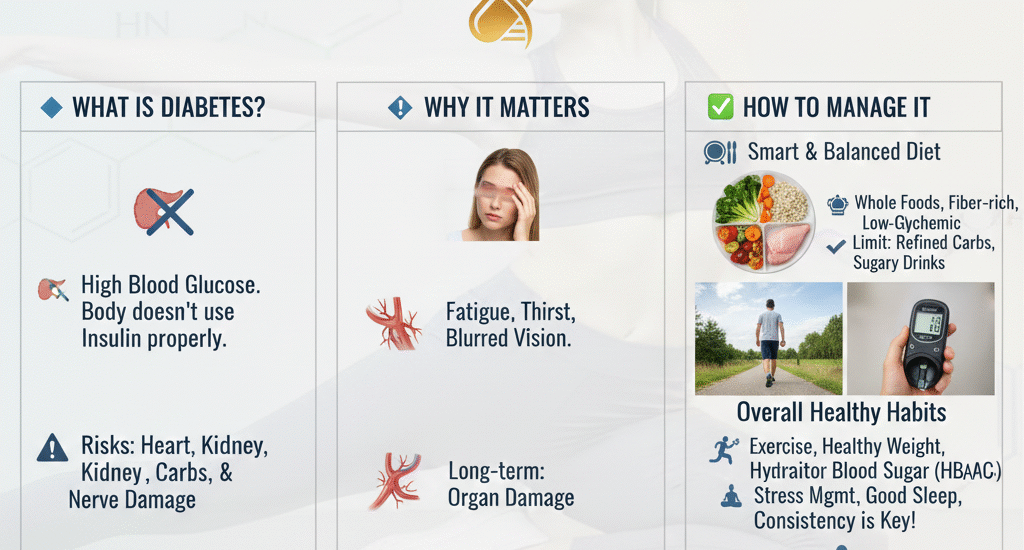
🔹 What is Diabetes?
Diabetes is a condition in which your blood glucose (blood sugar) becomes too high. This happens when your body either doesn’t produce enough insulin (a hormone that helps move glucose into cells) or cannot use insulin properly. Cleveland Clinic+1
When blood sugar stays high for long periods, it can increase the risk of serious health problems — affecting organs like the heart, kidneys, eyes, and nerves. NIDDK+2mgimsharyana.com+2
There are different types of diabetes. Some people may require insulin therapy, while others manage it through lifestyle and medication. mgimsharyana.com+2Redcliffe Labs+2
⚠️ Why Blood Sugar Control Matters
If diabetes or high blood sugar is left uncontrolled:
- It can cause frequent urination, excessive thirst, unexplained weight loss, fatigue, blurred vision — among other symptoms. Dr Lal PathLabs+2Cleveland Clinic+2
- Over time, it can damage blood vessels, nerves, kidneys, eyes; lead to poor wound healing and increased risk of heart and circulatory diseases. NIDDK+2Bansal Hospital Bhopal+2
- Therefore, managing blood sugar is not just about feeling good — it’s crucial for long-term health and quality of life.
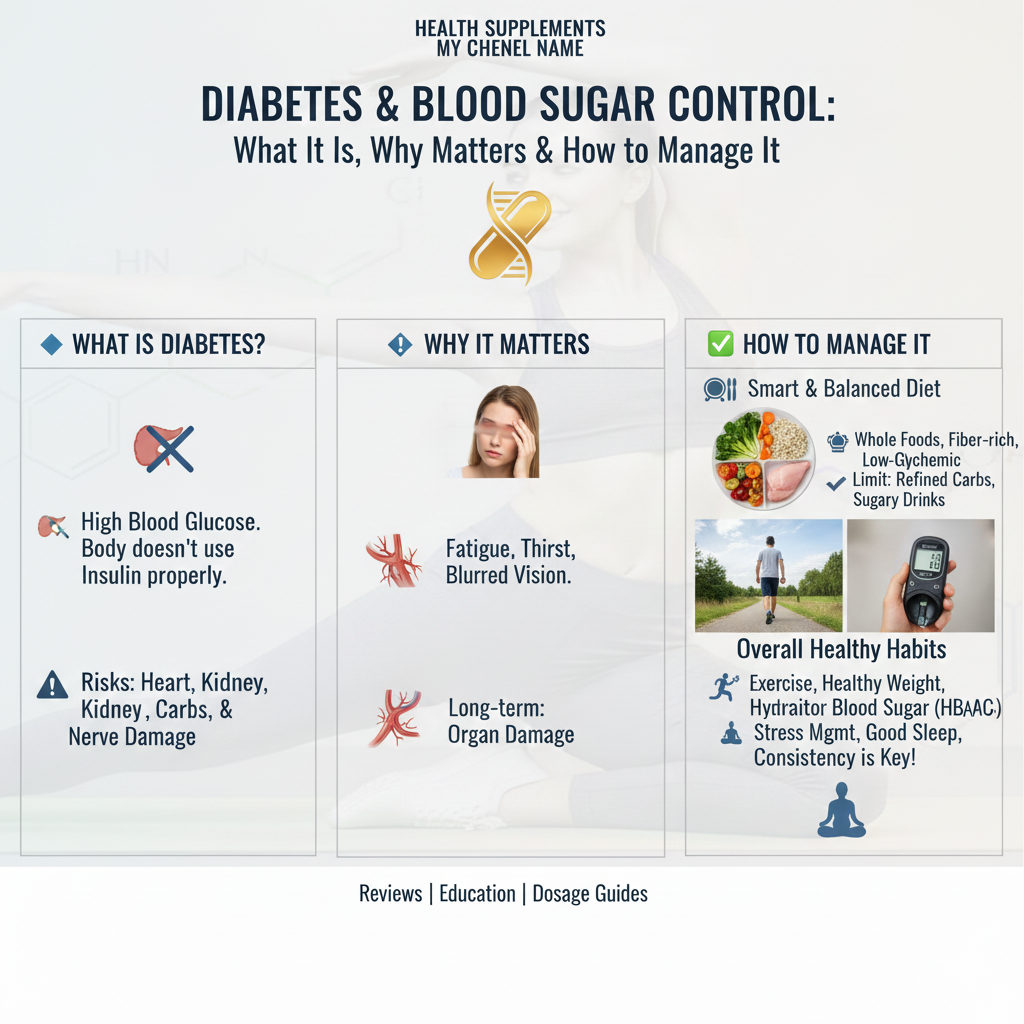
✅ How to Manage / Control Blood Sugar: Lifestyle, Diet & Habits
Controlling blood sugar doesn’t always mean medicines only — many people benefit greatly from healthy lifestyle, diet, and regular monitoring. CDC+2Paras Hospitals+2
🍽️ Smart & Balanced Diet
- Focus on whole foods: whole grains, legumes, vegetables, fruits, lean protein (beans, pulses, eggs, fish, chicken), low-fat dairy. These help your body manage glucose better. MedlinePlus+2Graphic Era Hospital+2
- Prefer high-fiber and low-glycemic foods: Non-starchy/leafy vegetables, whole grains (brown rice, oats, quinoa), beans — fiber slows down sugar absorption. CDC+3Mayo Clinic+3NIDDK+3
- Avoid or limit refined carbs, added sugar, sugary drinks, deep-fried/processed foods — these cause spikes in blood sugar. Mayo Clinic+2Dr Lal PathLabs+2
- Include healthy fats and proteins (nuts, seeds, fish, lean meat): they help stabilize blood sugar and avoid overeating. Mass General Brigham+2Moneycontrol+2
A good rule: roughly half your plate as vegetables, one quarter as lean proteins, one quarter as healthy carbs or whole grains — sometimes referred to as a “balanced-plate approach.” NIDDK+1
🏃♂️ Regular Physical Activity & Healthy Lifestyle
- Stay physically active — walking, cycling, yoga, moderate exercise helps your body use glucose better, improving insulin sensitivity. CDC+2miracleshealth.com+2
- Maintain a healthy body weight — excess weight, especially around the waist, can worsen blood sugar regulation. mgimsharyana.com+2virtua.org+2
- Stay hydrated — drinking enough water helps your body regulate glycemia well. Mayo Clinic+1
- Regularly monitor blood sugar — track fasting sugar, take medicines or insulin (if prescribed), get periodic health tests (like HbA1c) as suggested by doctors. Redcliffe Labs+2mgimsharyana.com+2
🧘♂️ Overall Healthy Habits & Awareness
- Stress management, good sleep, avoiding smoking or excessive alcohol — all contribute to better metabolic & blood sugar control. Bansal Hospital Bhopal+1
- Understand what foods/behaviors spike your sugar and avoid them — personalized care matters because each body reacts differently.
- Consistency is key: healthy eating + activity + monitoring should be part of daily lifestyle, not occasional efforts.