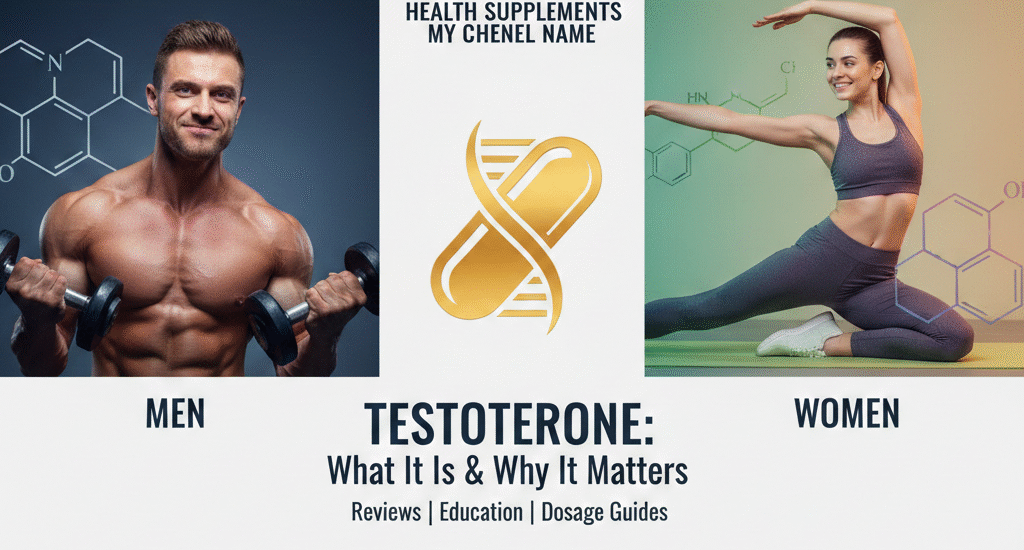
Testosterone: What It Is & Why It Matters for Men (and Women)
Hormones are the body’s chemical messengers — and testosterone is one of the most important. Testosterone is produced mainly by the gonads (testes in men, ovaries in women), and though its levels are naturally much higher in men, it plays vital roles in both sexes. Google Translate+2Cleveland Clinic+2
🔹 What does testosterone do?
- In males, testosterone is crucial for sexual development — it triggers change at puberty: growth of testes and penis, deepening of the voice, growth of facial/body hair. Harvard Health+1
- It helps build and maintain muscle mass and strength, and supports bone health and bone density. Cleveland Clinic+2Harvard Health+2
- Testosterone also plays a role in sexual health: libido (sex drive), sperm production and overall sexual functioning. UPMC HealthBeat+1
- It supports general bodily health: production of red blood cells, physical performance, energy levels, and contributes to overall well-being. Healthline+2UPMC HealthBeat+2
- Even in women — although at much lower levels — testosterone contributes to bone & muscle strength, libido, mood and overall hormonal balance. Dartmouth Health+1
In short — testosterone influences physical strength, sexual and reproductive health, energy, bone and muscle integrity, mood, and general vitality.

🔻 What Happens When Testosterone Is Low
When testosterone levels drop below normal, several aspects of health and quality of life can be affected — especially in men. Common issues linked to low testosterone include:
- Lowered libido (sex drive), erectile problems or difficulty achieving/maintaining erections, and fertility issues (reduced sperm production). UPMC HealthBeat+2Google Translate+2
- Loss of muscle mass and strength, increased body fat, reduced physical performance. Google Translate+2ckbirlahospitals.com+2
- Reduced bone mineral density — leading over time to weaker bones or risk of fractures. PubMed Central+2ckbirlahospitals.com+2
- Low energy, fatigue, reduced motivation or drive. Mood changes, including irritability, depression or a sense of low well-being have also been associated with testosterone deficiency. PubMed Central+2UPMC HealthBeat+2
- Cognitive or mental effects: poor concentration or focus (though these are less clearly defined). Google Translate+1
- For some men, hormonal imbalance may even lead to unexpected physical changes (like increase in fat around chest, changes in body composition). Google Translate+1
Because testosterone is so central to many bodily systems — muscular, skeletal, reproductive, mental — low levels can affect overall health and quality of life in multiple ways, not just sexual function.
🔄 Why Testosterone Levels Change Over Time
- During puberty, testosterone production ramps up dramatically to trigger growth and development. Harvard Health+1
- As age increases, natural testosterone production gradually declines. This decline can contribute over time to reduced muscle/bone strength, energy, libido, and other age-related changes. PubMed Central+2Google Translate+2
- Other factors — lifestyle, nutrition, stress, overall health — also influence hormone levels. Imbalance, illness, or unhealthy habits can accelerate decline. Google Translate+2ckbirlahospitals.com+2
Therefore, even though dropping testosterone with age is natural, its impact can be moderated or aggravated by the way we live.
✅ How to Maintain Healthy Testosterone Naturally (Lifestyle Tips)
If you want to keep testosterone levels healthier for longer — and preserve strength, energy, mood, and overall vitality — here are some useful natural strategies:
- Strength training / resistance workouts & exercise: Lifting weights or doing workouts that challenge muscles helps stimulate muscle growth and supports healthy hormone balance.
- Balanced, nutritious diet — including enough proteins, healthy fats, vitamins and minerals — helps your body produce hormones properly and supports muscle & bone health.
- Adequate sleep & stress management — good sleep and low stress are crucial because chronic stress, poor sleep or irregular routines can negatively impact hormone balance.
- Active lifestyle & healthy body composition — maintaining healthy body fat levels, staying physically active helps preserve hormone function, muscle mass, and bone strength.
- Regular health checkups — as you age or if you feel persistent symptoms (fatigue, low libido, mood changes), checking hormone levels may help.
Natural care, rather than quick fixes, often protects long-term health. Overuse or misuse of artificial hormone therapies or supplements — without medical supervision — may carry risks. Cleveland Clinic+2Google Translate+2
🧠 A Balanced View: Testosterone Is Important, But It’s Not a Magic Pill
While healthy testosterone levels support many aspects of health — muscles, bones, libido, energy — it’s not a guarantee for “superhuman” strength or perfect fitness. Some key points to remember:
- Hormone levels are just one part of overall health — lifestyle, diet, sleep, mental health, genetics all contribute.
- Tests and medical supervision are necessary before considering hormone therapy. In normal healthy men, artificially boosting testosterone may not always give expected benefits, and can carry risks (fertility issues, side-effects). Mayo Clinic+2Google Translate+2
- Balance is more important than extremes — aim for sustainable health habits rather than quick fixes.
✍️ Conclusion
Testosterone is far more than “just the male hormone.” It plays a foundational role in shaping physical strength, bone health, sexual functioning, energy levels, mood, and overall vitality — in both men and women (though men need much higher amounts). As we age, natural testosterone decline can contribute to weaker muscles, fatigue, lower sex drive, bone issues and general low vitality.
But the good news is — through healthy lifestyle choices like balanced diet, regular exercise, proper sleep, and stress control — you can help your body maintain healthier hormone balance and overall fitness. Focus on long-term well-being, not instant “hacks.”