
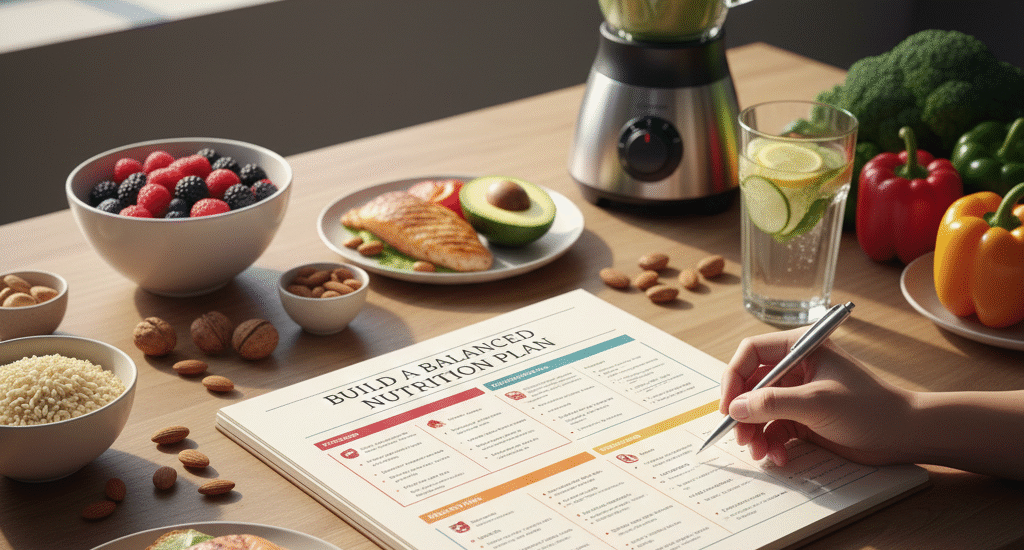
A balanced nutrition plan ensures your body gets all essential nutrients — carbohydrates (energy), proteins (body repair & growth), healthy fats, vitamins, minerals, fiber and enough water — in the right amounts. KVS Churu+2Medical News Today+2
Such a diet supports overall health: energy levels, immunity, proper growth/maintenance, healthy skin & hair, digestion, and reduces risk of chronic diseases. Metropolis India Lab+2World Health Organization+2
Major health organisations recommend eating a wide variety of whole foods — plenty of fruits & vegetables, whole grains, lean proteins or plant-proteins, and limiting processed foods, added sugars and excessive salt or unhealthy fats. World Health Organization+2Max Healthcare+2
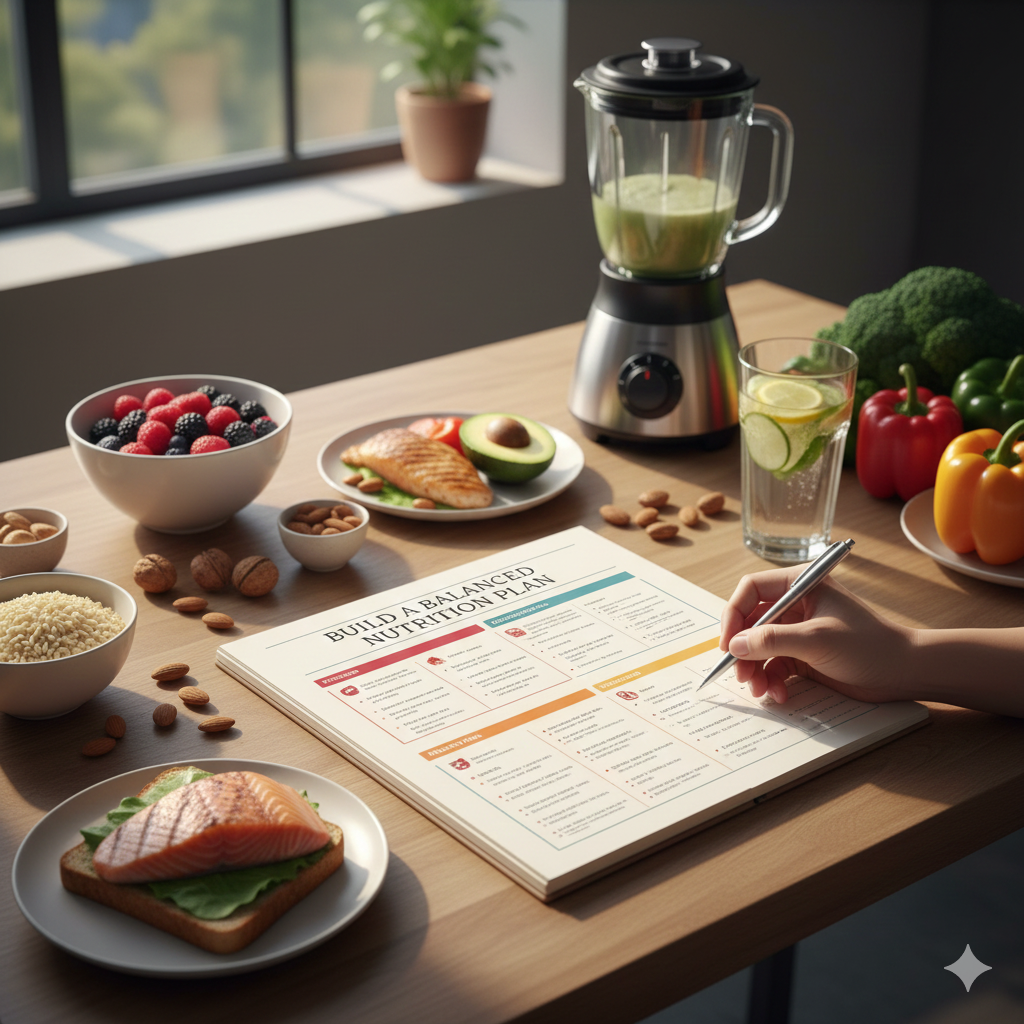
🥬 Key Components of a Balanced Diet
A good balanced diet typically includes:
- Fruits & Vegetables — provide vitamins, minerals, antioxidants, and fiber. nhs.uk+2World Health Organization+2
- Whole Grains / Healthy Carbohydrates — like brown rice, whole-wheat bread/roti, oats, millet, quinoa — for sustained energy and fiber. The Nutrition Source+2Apollo Hospitals+2
- Protein sources — lean meats, fish, poultry, eggs, dairy or dairy-alternatives, pulses/legumes, nuts & seeds — for muscle, tissue repair and healthy metabolism. CDC+2Cleveland Clinic+2
- Healthy Fats — from sources like nuts, seeds, olive (or other good) oils, fish — important for brain, hormone and cell health. Apollo Hospitals+1
- Fiber & Micronutrients — vitamins, minerals & fiber (from veggies, fruits, whole grains, legumes) support digestion, immunity, energy & long-term health. Metropolis India Lab+1
- Adequate fluids (water) — hydration is essential for digestion, metabolism, skin health and overall functioning. nhs.uk+1
As a simple guide, many nutrition experts recommend building each main meal so that roughly half your plate is fruits & vegetables, a quarter is whole grains or healthy carbs, and a quarter is protein (with healthy fats and fiber included appropriately). Cleveland Clinic+2The Nutrition Source+2
📅 Sample 7-Day Balanced Nutrition Meal Plan (Adult / General Healthy Diet)
Here’s a flexible 7-day example meal plan. Portion sizes may vary depending on your age, gender, activity level and calorie needs. Always adjust as per personal requirements or medical advice.
| Day | Breakfast | Mid-morning Snack | Lunch | Evening Snack | Dinner |
|---|---|---|---|---|---|
| Day 1 | Oats porridge + banana + a handful of nuts | Fruit (apple/orange) + water | Brown-rice + dal/pulses + mixed veggie sabzi + salad | Roasted chickpeas or mixed nuts | Grilled fish/chicken or paneer + whole-wheat roti + green salad |
| Day 2 | Whole-wheat toast + eggs (boiled/poached) + fruit salad | Buttermilk / low-fat yogurt | Whole-wheat roti + sabzi (mixed veg) + lentils + salad | Carrot / cucumber sticks + hummus | Quinoa pulao + beans/legume curry + steamed veggies |
| Day 3 | Smoothie (milk / plant-milk + berries + spinach + flax/seeds) | A handful of almonds / walnuts | Millet (like bajra / jowar) roti + sabzi + curd + salad | Fresh fruit / seasonal fruit bowl | Stir-fried tofu/veg + brown-rice + salad |
| Day 4 | Poha / upma (made with minimal oil) + a glass of water + fruits | Nuts + green tea | Brown-rice + rajma / chole (beans) + vegetable sabzi + salad | Sprouted moong / chana chaat | Whole-wheat roti + mixed veg sabzi + dal + salad |
| Day 5 | Whole-grain cereal / muesli + low-fat milk + fruit slices | Yogurt + few nuts | Grilled lean meat/fish or paneer + quinoa/brown-rice + mixed veggie salad | Fruit or buttermilk / low-fat yogurt | Lentil soup + whole-wheat rotis + side salad |
| Day 6 | Vegetable omelette + whole-wheat bread + fresh fruit | Seeds + fruit / water | Whole-wheat roti + sabzi + dal + salad | Nuts or fresh fruit | Stir-fried vegetables + beans / pulses + brown-rice |
| Day 7 | Overnight oats + berries + seeds + milk / yogurt | Mixed nuts + fruit | Millet roti + vegetable curry + lentils + salad | Fresh juice (no added sugar) + nuts | Grilled fish/chicken/legume curry + whole-wheat roti + green salad |
General Tips:
- Include 2–3 servings of fruit and 3–5 servings of vegetables daily (try to vary colours for different nutrients). nhs.uk+1
- Prefer whole grains over refined grains (e.g. brown rice over white, whole-wheat roti over refined flour) for sustained energy and fiber. The Nutrition Source+2PMC+2
- Include lean proteins or pulses/legumes — either animal-based or plant-based — to support muscle & body repair. CDC+1
- Use healthy oils (olive, vegetable oils) in moderation; avoid excessive saturated or trans fats. Apollo Hospitals+1
- Drink plenty of water/fluids daily; avoid sugary drinks or excessive processed snacks. nhs.uk+1
✅ How to Customize & Maintain Your Nutrition Plan
- Adjust portion sizes depending on your age, activity level, health goals (weight loss, maintenance, muscle gain etc.)
- Vary the types of proteins — alternate between pulses/legumes, fish, poultry, eggs, dairy, nuts to get a range of nutrients.
- Mix colours in vegetables/fruits — different colours signal different vitamins, antioxidants and phytonutrients.
- Limit added sugars, processed foods, excessive salt, trans-fats and sugary drinks — these reduce the nutritional value and can harm health. NDTV India+1
- Combine the nutrition plan with physical activity, adequate sleep, hydration and stress-management for optimal health and well-being.
🌟 Benefits You Can Expect with a Balanced Nutrition Plan
- Improved energy levels, better metabolism and stable blood sugar
- Stronger immunity, better digestion and gut health
- Healthy weight management, reduced risk of chronic diseases like diabetes, heart problems, etc. CDC+1
- Better skin, hair and overall physical health — because nutrients support cell repair, detoxification, hydration, and body systems
- Improved mental health, mood, and longevity — proper nutrition supports brain, hormones, bones and overall well-being