
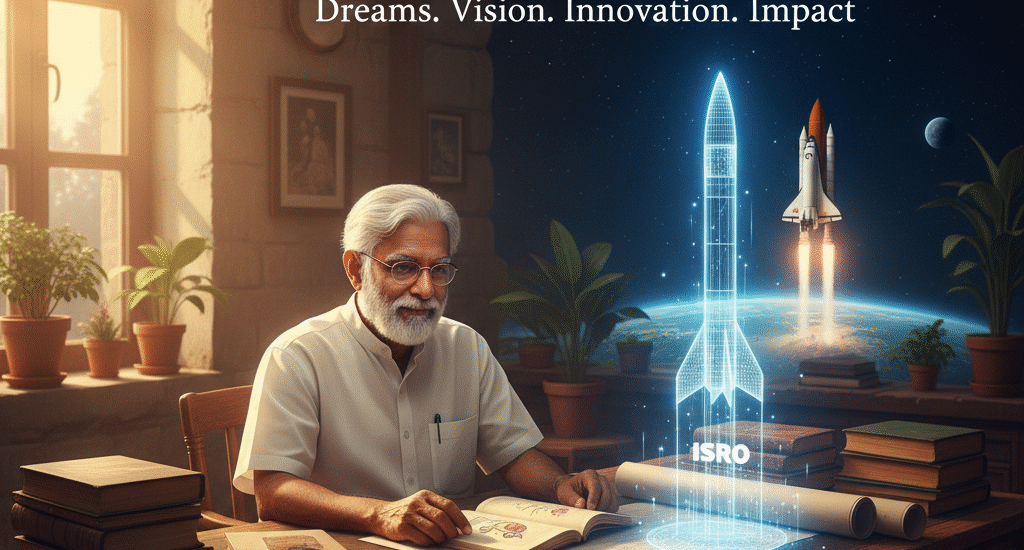
- A. P. J. Abdul Kalam was born on 15 October 1931 in a modest family in the coastal town of Rameswaram, Tamil Nadu. aspirational.vikaspedia.in+2Jagran+2
- Despite humble beginnings and financial constraints, he was deeply inclined towards education from a young age — even worked odd jobs (like newspaper-selling) to support his studies. Jagran+1
- He went on to study physics and then aerospace/ aeronautical engineering at the Madras Institute of Technology (MIT). Wikipedia+2Zeenext+2
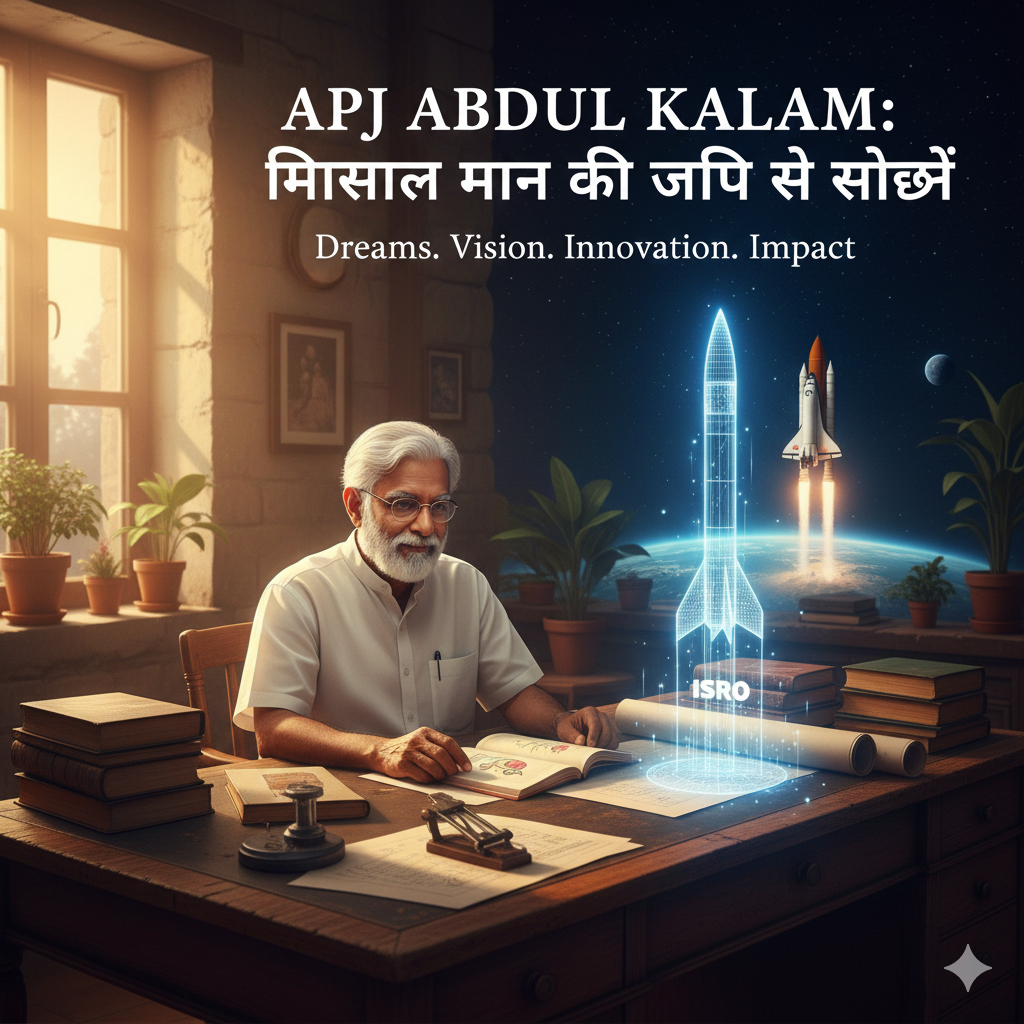
- Over a career spanning decades, he worked as a scientist, engineer, project-leader — at the Indian Space Research Organisation (ISRO) and the Defence Research and Development Organisation (DRDO). Wikipedia+2President of India+2
Because of his contributions to developing India’s space and missile technologies, he became widely known as the “Missile Man of India”. Jagranjosh.com+2Ignite India Education+2
Later, he went on to serve as the 11th President of India (2002–2007), during which he earned the reputation of the “People’s President.” Encyclopedia Britannica+2Ignite India Education+2
🔧 What He Did — His Key Contributions
- As a leading scientist, Kalam was deeply involved in India’s space-launch and missile development programs. He played a central role in projects like the satellite launch vehicle (SLV) programme and later missile programs under the Integrated Guided Missile Development Programme (IGMDP). President of India+2Leverage Edu+2
- Under his leadership, several indigenous missile systems (like Agni missile, Prithvi missile and more) were developed — marking India’s stride toward self-reliant defence capabilities. Jagranjosh.com+2planetspark.in+2
- His work also contributed to India’s advancements in space technology and launch-vehicle development, helping India build credible space-launch capacity. Wikipedia+2The Times of India+2
- Beyond science — as President, educator, author — Kalam always emphasized education, youth motivation, and national development. He wrote inspiring books, engaged with students, and worked to ignite dreams and aspirations among India’s young generation. Ignite India Education+2planetspark.in+2
💡 Lessons & Mindset We Can Learn from Kalam’s Life
Here are some of the core lessons from Kalam’s life that hold value even today:
1. Humble Beginnings Are No Barrier to Greatness
Kalam grew up in a small town, in a family without wealth or privilege, yet he believed in his dreams. His early struggles didn’t discourage him — instead they motivated him to work harder. That shows: background may shape you, but doesn’t define you.
2. Education + Passion Overcomes Hardship
Despite difficulties, Kalam prioritized education. He didn’t just aim for degrees — he used his learning to contribute meaningfully to science and society. Passion + hard work can open doors, no matter how tough the start.
3. Dream Big, Work Diligently
Kalam’s ambitions — to help India soar in space, to make the country technologically self-reliant — were huge. But he broke them into actionable goals, worked step by step, and achieved them. Dreaming is important; following it with persistent effort is essential.
4. Integrity, Humility & Simplicity — Even at the Top
Even after fame, success, and high office, Kalam remained grounded, humble, approachable. As President, scientist, writer — he was known for his simplicity and humility. That’s a strong reminder that true greatness doesn’t need grandeur.
5. Belief in Youth, Education & Future of Nation
Kalam never forgot his roots or where he came from. He believed strongly in empowering youth through education, inspiring dreams, and motivating young minds. He serves as a role model for generations wanting to create change.
6. Combine Vision + Skill + Discipline
Kalam wasn’t just visionary — he had technical skill, an analytical mind, disciplined approach. His life teaches that vision must go hand in hand with knowledge, discipline, and continuous learning.
7. Serving Society & Nation — Not Just Self
Through his scientific work, public service, presidency and mentoring — Kalam dedicated his life to the country’s welfare. His life encourages placing larger purpose (society, nation, collective progress) above individual gains.
🌟 Why Kalam’s Legacy Still Matters
- For aspiring scientists, engineers and students — Kalam’s journey shows that innovation + hard work + integrity can overcome all odds.
- For anyone with dreams — his life suggests, no dream is too big if you stay committed.
- For society — Kalam’s emphasis on education, youth empowerment and national progress remains deeply relevant. In a world of quick fixes, his disciplined, value-driven approach stands out.
- For leadership — he proved that true leadership is not just about power or position, but about vision, empathy, humility and inspiring others.